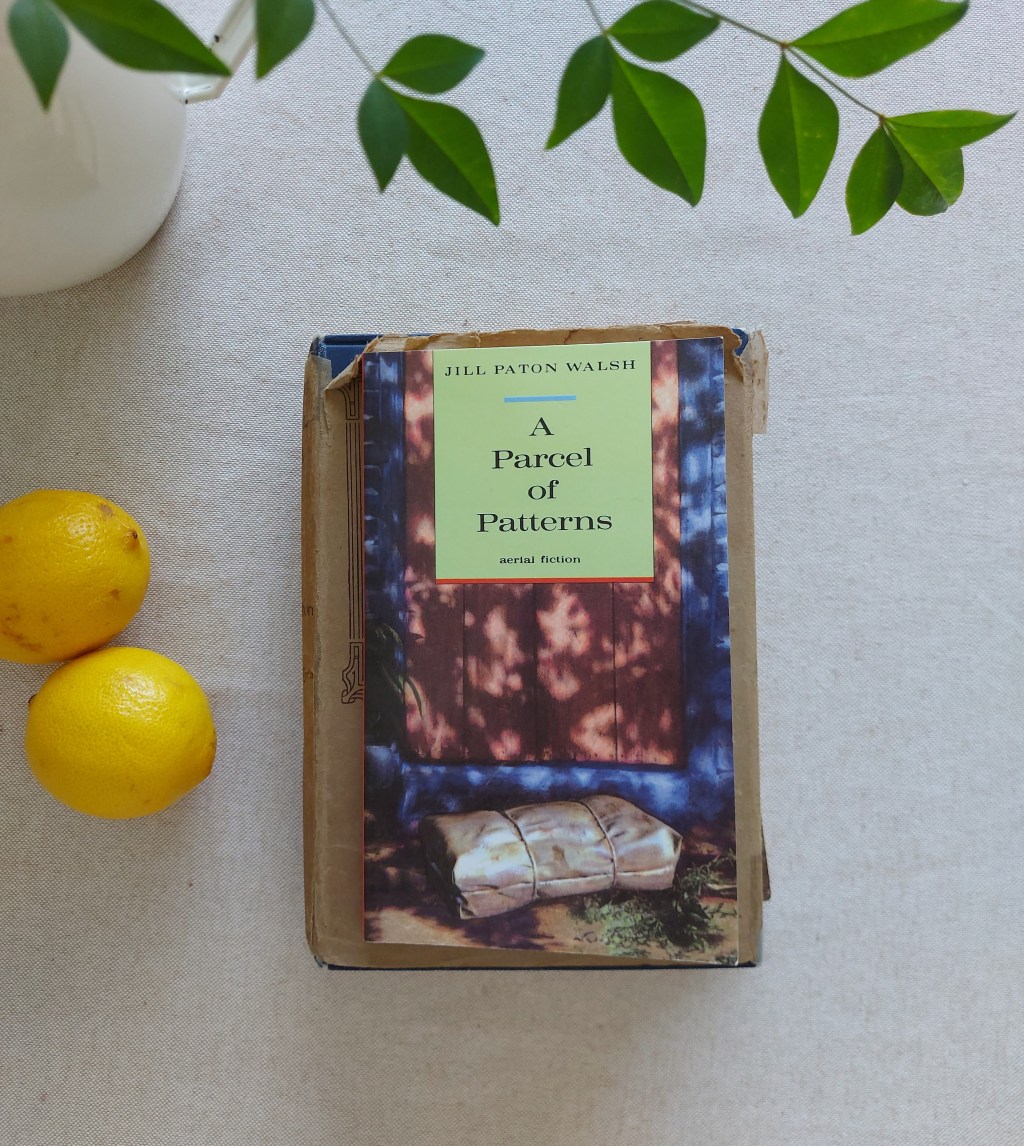
The first phrase in this ruddy account of the Plague in 17th century England runs thus: A parcel of patterns brought the Plague to Eyam. Published in the 1980s, A Parcel of Patterns is the sort of historical fiction I wish there was more of. The language is somewhat heavy, but I got used to it, and its lovely lack of modernism soon carried me along. Paton Walsh honours the people of Eyam and their story by trying to tell it as they would’ve – in their words.
On a wet day in 1665, a parcel of patterns arrived on the doorstep of George Vicar’s lodgings. George Vicar was a travelling tailor, and he had the patterns sent up from London. They were soaked through and hung up to dry inside by the fire, but as they dried, they issued a terrible stench into the room. The Plague had arrived. What followed was an almost total devastation of the people of Eyam.
A Parcel of Patterns is about community and Christianity, folk stories and superstition, sickness and death, and love and friendship all at once. But most wonderfully, it tells thrilling stories. It tells about how whole families were killed within weeks, and their houses were left to grow moss and mould; infected blankets were left hanging on the hedges for others to burn when their owners were no more; death came at the most unexpected times and was horridly cold and cruel. It is a haunting tale, yet pastoral, close, and familiar. Reading it gave me tiny thrills every now and again.
It taught me about the lifestyle people lived when most were illiterate, yet smart and quick. It taught me how people used to think, and how the world used to be, and why it’s changed. It taught me about the old, forgotten everyday things, and much more besides.
The ending left me with a strange empty feeling – all those people now gone, the empty houses, the remaining villagers left to scratch their mark back into the land, to cull the rabbits and mice which had bred in the absence of the living. I do believe that strange empty feeling is the mark of a good book – all the best books end with it and are better off for it. A Parcel of Patterns is just such a book.

 Grace Fatchen
Leave a comment