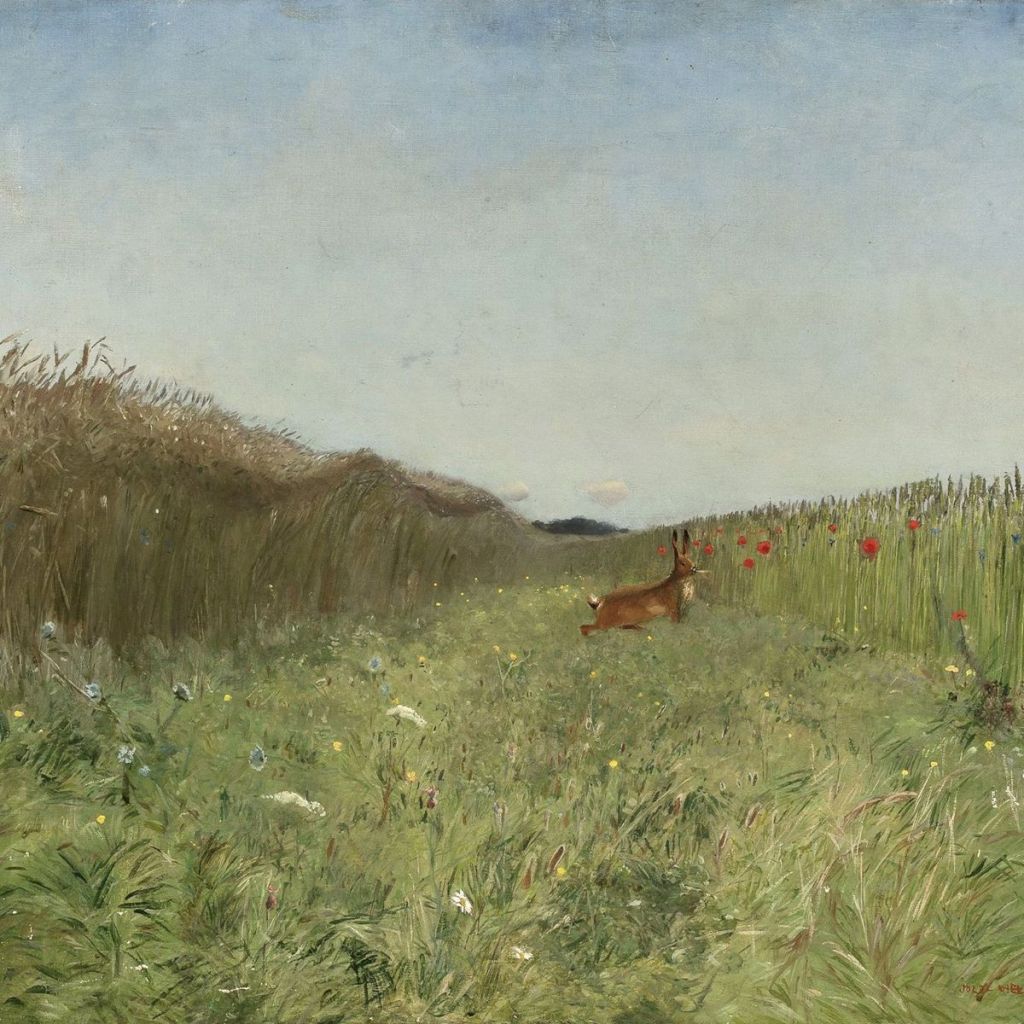
I wasn’t particularly drawn to rabbits before reading Watership Down, but having done so, I think them the most noble, mischievous and intelligent of animals. I’d like to think I’m endowed with a certain amount of luck whenever one skitters across the road as I’m driving, or dashes from the bushes beside me. Yes, rabbits are lucky creatures. And witty too. Wittier than most humans I have met. I’ve learnt a lot about their ways and have started adopting some of their charming vernacular (to silflay, for example, is to feed above ground in those pretty cobwebby hours before sunrise or after sunset).
Now regarded as a classic, Watership Down follows the journey of a band of rabbits who are out to find a new warren. Written in the mid-1960s by Richard Adams, it began as a story Adams told his daughter while travelling in the car and grew from there. Much of it was based on the author’s own experiences in the war, and having known this, my reading of it became far more enjoyable. I caught a glimpse of the soldier’s world – of terror, comradery, of absolute trust and respect – of what it may have been like in combat during the world wars for soldiers who were constantly protecting, fighting, leading and trusting. I was glad for this empathy, which will one day prove useful, I’m sure.
Watership Down reads quite like a fable and reminded me at times of Avery’s version of Reynard the Fox (quite a snappy read if you’re into animals ridiculing each other over their own philosophies and politics), and is imbued with a sense of charm, the characters with a good-hearted friendliness. It gives many useful and beautiful examples of teamwork, leadership, friendship and strength. Like any excellent read, it left me lonesome for the good things I had found in it, not the least of which was loyalty and a high, decent respect. Each rabbit possessed some cleverness or gift – whether wit, intuition, storytelling, humour, leadership or physical strength – which seemed to be theirs solely for the sake of his fellow creatures, to help them along in their adventures. Extraordinarily, it made me miss my friends. Because I believe the former is true for humans also. We should always give of our own talents – we become lonely when we cease to use our brilliance for the sake of others.
Quite unexpectedly, the Chief Rabbit in the story isn’t the strongest or the most daring or the funniest or the most charismatic. He exudes a sort of concern, can be somewhat of a wet blanket, but is the most willing to put himself in danger so that his friends might be safe. His fellow rabbits respect him, never question his leadership, but know they’re free to discuss plans and concerns on equitable terms. Every character has their particular burden to bear, but the nature of Hazel’s leadership makes his burden by far the greatest. And he bears it well right to the end.
And because the elusive splendour of such a book needs some extra explanation, I shall finish on this point: throughout the tale, Adams cleverly and somewhat cryptically emphasises the importance of Story – frequent stories are told along the rabbit’s journey about El-ahrairah (Lord of the rabbits) and his trusty companion Rabscuttle, punctuating – sometimes even commenting on – the band’s own adventures, reminding his reader how important Story is for strength and knowledge. Tolkien illustrates the same in the Lord of the Rings trilogy. On Sam and Frodo’s journey to and through Mordor, they constantly remind each other of the stories they were told in days past over a cosy pint or sitting around the fireplace back at the Shire. ‘Remember when such and such did so and so’, or ‘So and so had to do this and that’. Tired, frightened, wet and uncomfortable, both hobbits pull from their own story bank what they know of danger, heroism and victory, and they apply it to their own adventure. This keeps them journeying on through danger, toil, and despair. Hazel’s band of wandering rabbits do the same – Dandelion, the brilliant and avid storyteller – spins yarns of Lord El-ahrairah to boost everyone’s spirits and send them on stronger than ever before.
And I think that’s what makes books like Watership Down so noble*. They’re universal, reaching beyond themselves and into the Virtuous and the Worthy, skirting the edges of Bravery and Honour to point us the way home.
*I know it sounds like all I have for Watership Down is praise, but that’s because I do; it really was that good. And Story is something I’m nerd-ing out about at the moment, so thank you for reading that final, slightly obsequious paragraph (and for getting this far). Your commitment is much appreciated!


 Grace Fatchen
Leave a comment