Lorna Doone is an incredibly original, exciting and touchingly witty romance. I found the story unexpectedly fresh since it hasn’t been done to death in school curriculums and on the screen. It holds all the charm of a knight-in-shining armour tale with a heroine who is beauty and spunk all at once: her beauty springing from goodness and gentleness, her spunk springing from purity and a healthy dose of fun. Lorna is a woman who loves from a nature that is soft – there lies her true beauty. She is intuitive, gracious and discerning, and ready to allow John the gift of giving – thus she is truly feminine. John Ridd is a big, humble farmer. In narrating his story, he calls himself ‘slow’, but it is the reader alone who is privy to his deliberate action and swift righting of wrongs. He loves well, and fights for his lady.
I once read a very sad line, made sadder by the fact that it appeared in the preface of an inspirational book intended for boys. It went something like this: Why read stories of knights in shining armour rescuing damsels in distress who, quite frankly, could have rescued themselves? The world needs men who push the boundaries and are different.
What a terrible thing to tell a 10 year old! And I shall explain why, bringing it back to John Ridd and the virtue of manliness. Aside from sounding ironically unmanly the author is entirely missing the point. It’s not that the damsel can’t save herself (although she probably cannot), it’s just that a man wielding honour and nobility can and should because it’s good for him to save, as it is good for the damsel to let him.
But instead, the boy reading this book is told that ideals like chivalry are shameful and that women don’t need his protection. I am very glad my own father and brothers were not raised like this! Unlike the bland modern claim of ‘we’re all the same’, the social code of chivalry cheerfully calls out courage in the coward and gentleness in the warrior, thereby balancing and forming the human nature towards the Ultimate Good and upholding God’s created distinctions in the world. So, we come again to John Ridd and his upright, noble bearing. John lives in the truth of virtue – he dwells within a culture that renders men and women distinct, thereby uplifting both sexes while damaging neither. He shows us just how honourable defending the weak can be, and in turn he is rewarded for his integrity.
He dwells within a culture that renders men and women distinct, thereby uplifting both sexes while damaging neither.
Throughout the book, Justice – as the fight for good and the upholding of righteousness through the righting of wrongs – is defended and upheld by John. While Love, as the beautiful patience of home and place and belonging, is exemplified and borne in Lorna’s character. Their story teaches us the glory of honour, the necessity of chivalry and the delicate, steadying balance that is humility.
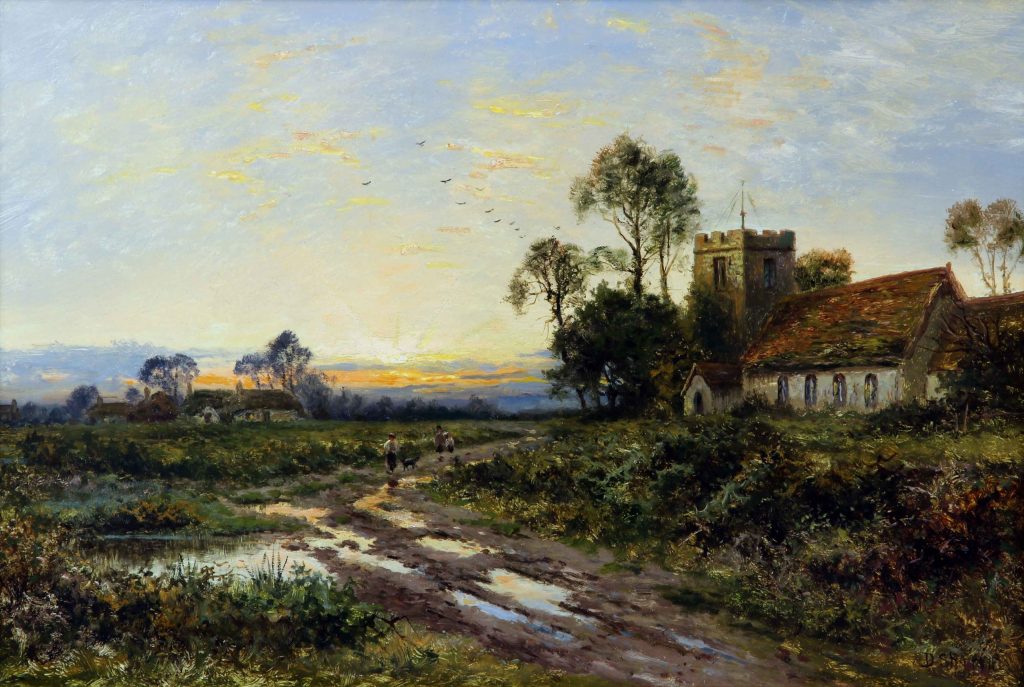
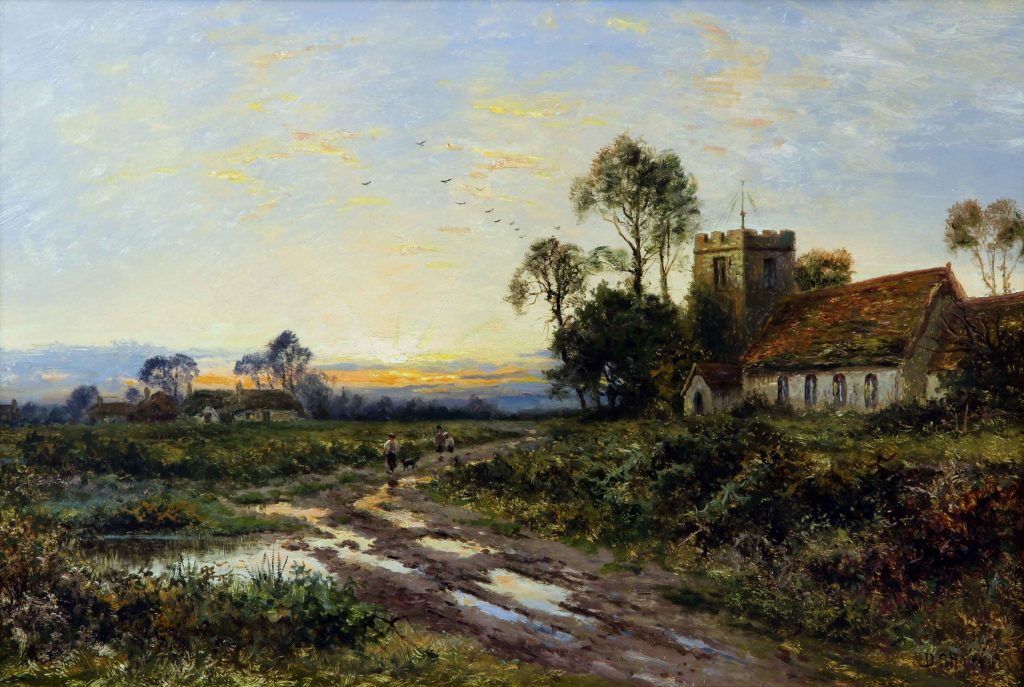
End of the Day Daniel Sherrin circa 1900-1910: https://wgreenwoodfineart.co.uk/product/daniel-sherrin-end-of-the-day-an-english-rural-landscape-oil-painting/
And of course, there is the essence of the story itself – that lovely, fleeting thing often held in good literature – the beckoning of some Great Wonder beyond oneself, lifting the mind above the soddy smut of our nether world to a deeper Goodness, the perfect Reality. And using the stories of limited, broken human beings to do so. This is the genius behind every great book. Though Lorna Doone may be one of the lesser gems in literature, it is certainly no less beautiful for being obscure.

 Grace Fatchen
Leave a comment