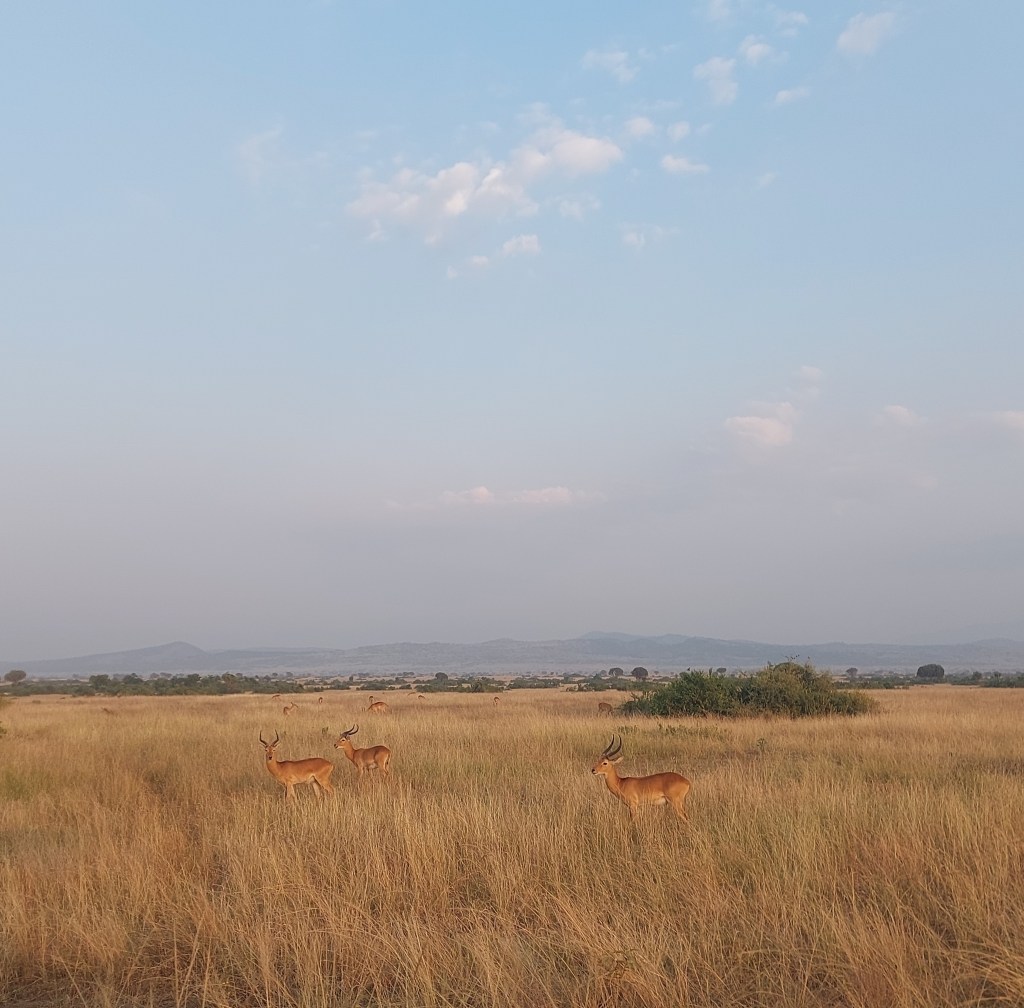
A collection of stories and poetry about my recent trip to Uganda…
Free
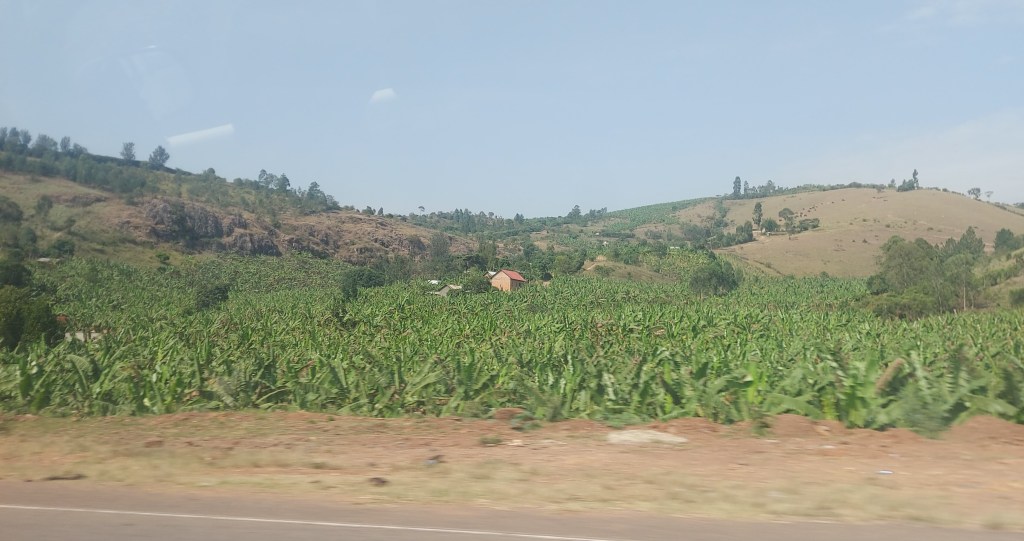
Bicycles, banana plantations and dry rolling hills; matoke, stew, sodas at the end of a long, hot day. A swallow darts around on the ceiling, coming in and out through the louvred windows, and on the walls, giant grasshoppers sit quiet; red dust amid the green; searing sun at noon with Fur Elise played off key; in the dark of 5am there stirs a whining call to prayer, and my room smells like ripe fruit and soap… Waking properly to soft, cheerful chatter, children shouting, chooks clucking, the gentle, reedy swish of someone sweeping the pavement. Pink hibiscus after a trek up the mountain; ginger beer in old, scuffed bottles; a dusty red Southern Cross soon to set and my own happy thoughts alongside new friends; pool with Toto’s Africa – breeze on a boda boda; a lolling dog trots past, pink tongue hanging out; hazy smoke and more banana palms and everywhere I look are the joyful, languid Ugandans working hard, and free.
Dust
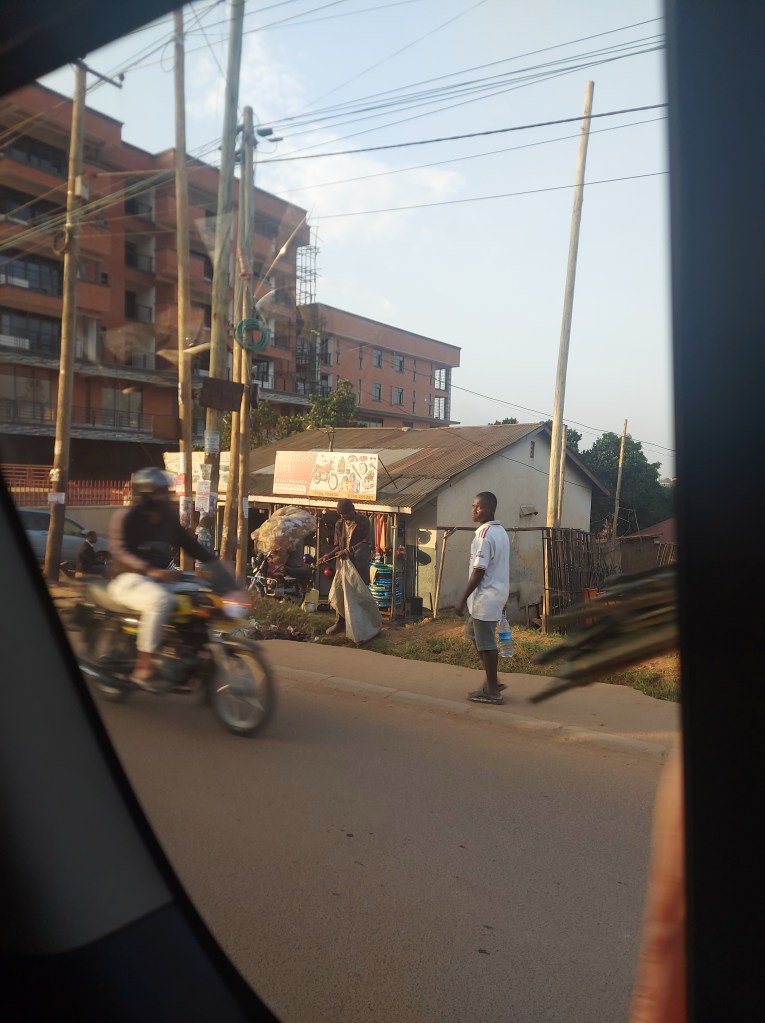
Just a glimpse out the window: it is a boy on a bike. He’s riding into the wind, ragged shirt flapping on the dusty flats. A drift of haze – his own dust-cloud – between us. And the mountains beyond lie still.
Refugees
It begins with smoke on the mountain, rising, drifting along the ridgetop into the valley spread out before us. We all stand in a row on the side of the road, watching. On the way back to the car, an old, strong jaja holding a stick and wearing bright red asks for some shillings – her dark eyes like pools of brown water spilling over. One of those remembered by the Lord…
Driving on down the road, we pass a small child sitting outside his house on a mat, still as a statue, watching us go by. Chickens, pigs, a dead dog, dusty red-roofed houses among the farmed green. We meet some Congolese children rummaging about in a green tomato crop, and Bishop Khazi stops to pick up. To take them home.
And there they are all seated in the shade – a sudden, overwhelming shyness at this unexpected crowd overtakes me. Men sit on one side, women on the other. Bare breasts feed hungry mouths, and children clamber about their mothers who wear lace headdresses. A Muslim lady in ragged, faded-purple hijab looks on. She is the most beautiful of them all. Her eyes hide nothing, full and deep and true. She has come up out of the plantations with some others and sits at the back. The only woman among the men. I catch her glance for a moment and wonder about her: a beautiful, suffering face amid the palm fronds and half-buried houses.
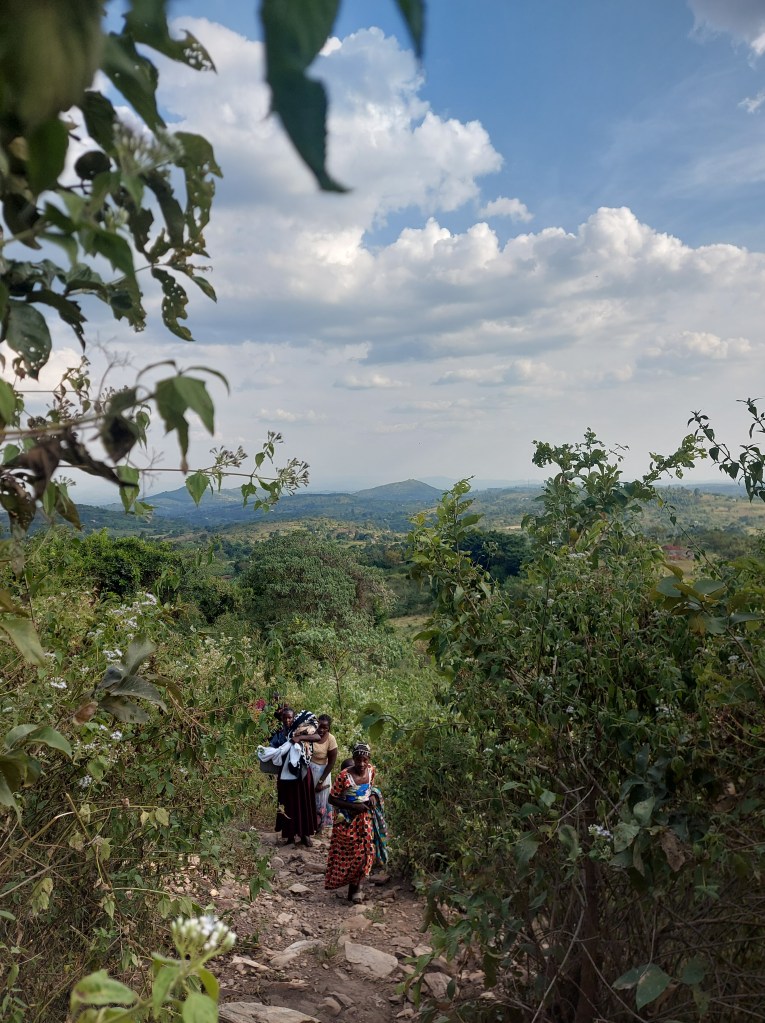
A father lifts his baby up and kisses him. It is all he can do – such a tiny action, yet full of hope and strength. These men are hoping. Else why would they kiss their children like that? Still, the shame, pain and sorrow remain caught up behind these silent faces. But then the dance begins, the singing. And their eyes – a moment ago so downcast – are smiling now; the joy found there, hidden deep down, floods the air, sudden and surprising. And they dance and sing and my foot taps in rhythm. The man who I saw with his baby is dancing in the midst of them all. Together we walk with them partway up the hilly mountain to their homes, eager to tread the path of empathy with our new friends. Glancing behind us, we see the small village below, the hills, the clouds, the air, and we are climbing. Full of hope. A little like the Congolese with us. Too soon, our driver Cyrus comes to get us, his face full of care, and we reluctantly turn back. Above us, men with children on their shoulders and ladies with babies on their backs give us farewell and thank us for coming so far. These Africans have a way of making you feel saintly. We leave with the breeze in the grass and the sun getting low and those happy, desperate people waving to us further up the mountain. We stride back down the rocky track, wishing we could have followed them all the way.
Pool
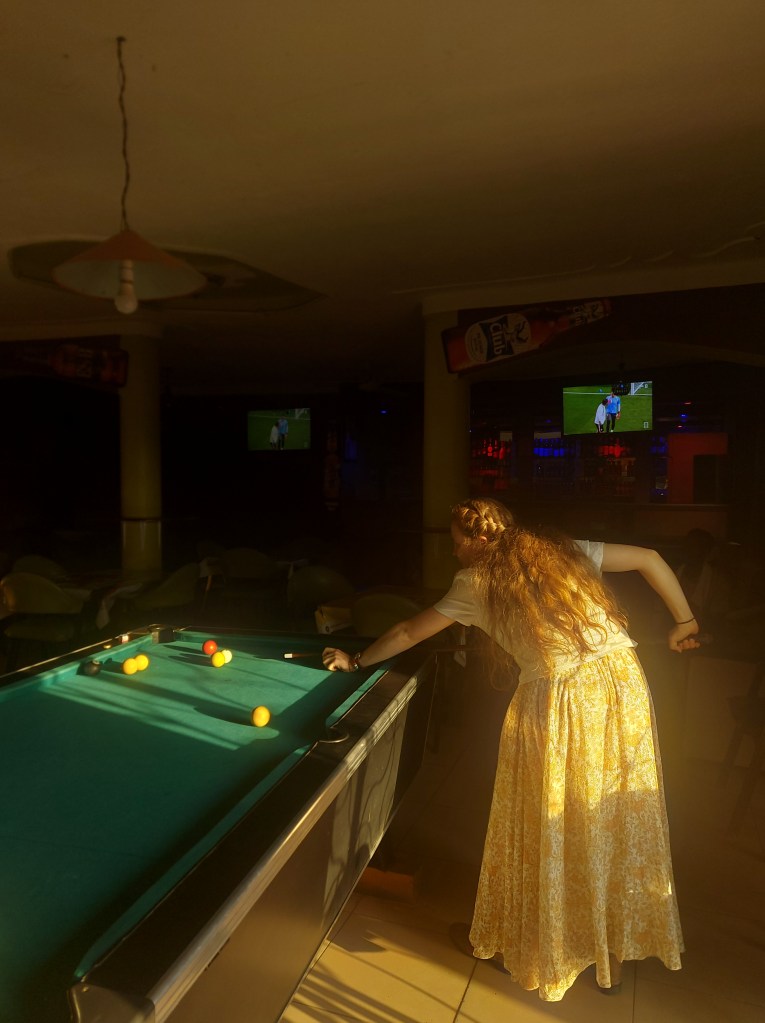
The golden afternoon sun trickles into the room and I’m on my last shot. A breeze puffs the curtain. Locals gather at the door to catch a glimpse of these strange mzungu girls playing pool. The world cup on TV, soft words in a language we don’t understand, the bleat of a goat, the cluck of a hen. We banter and laugh together, walk home in the dusty-pink sunset together. Always together.
Refugees II
The sun shone for us; the wind blew about like a story. Following our new African friends up the mountain. I will always remember their faces. Those dark eyes unreadable, with the pain hidden away reluctant to come out. Then just when I thought they had given up hope, joy came breaking out of them like the bursting sun through cloud. But their sorrow remains. How I wish I could ease it with words.
We farewell each other
As you stand beneath a tree
upon the side of a mountain,
smiling your thanks.
I wave to you around the bend.
My Congolese friend.
Grave
‘The village was full of witchcraft before there was a church here. And this man would go up Mt Kabuga every day to pray. He cast out demons and planted a church.’
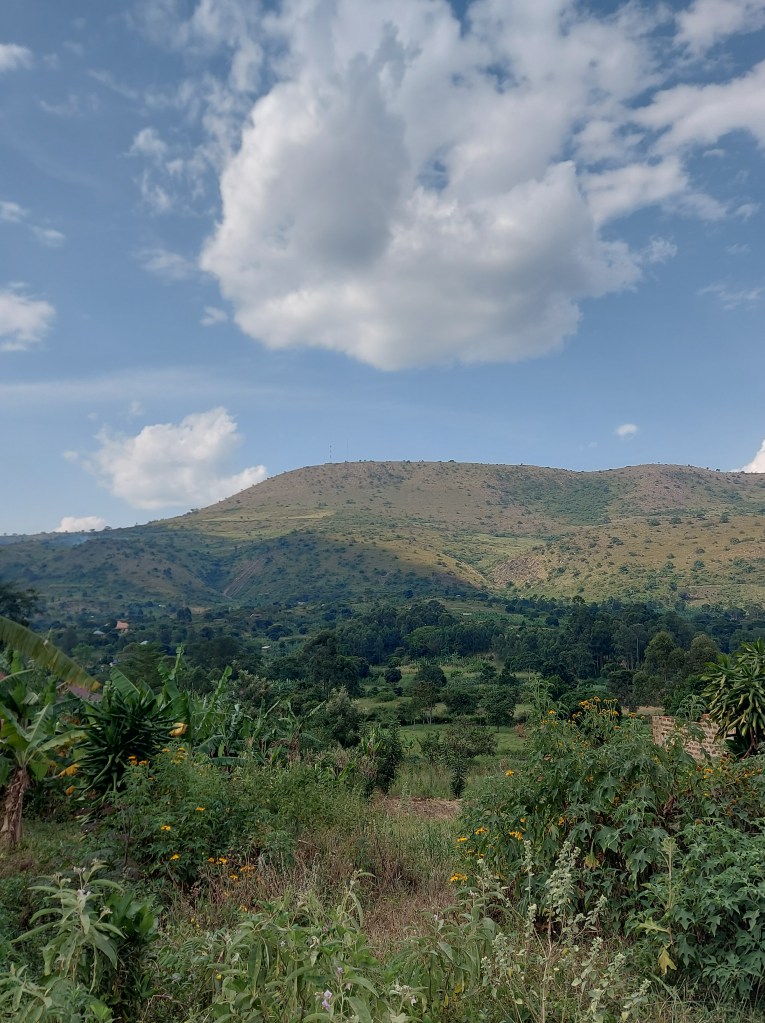
Someone pointed out where his grave was – down a red-dirt track with the mountain behind and trees either side. The sun fell down between the clouds, and the wind blew the leaves so that they shivered to and fro. For a moment, I looked down that road and thought of the great African man who loved his country and his Lord so that the darkness ran away. I stared at that road and felt the whisper of his invisible blessing in the trees, coming down the mountain on the wind. The sun broke through the clouds, streaming white.
Home
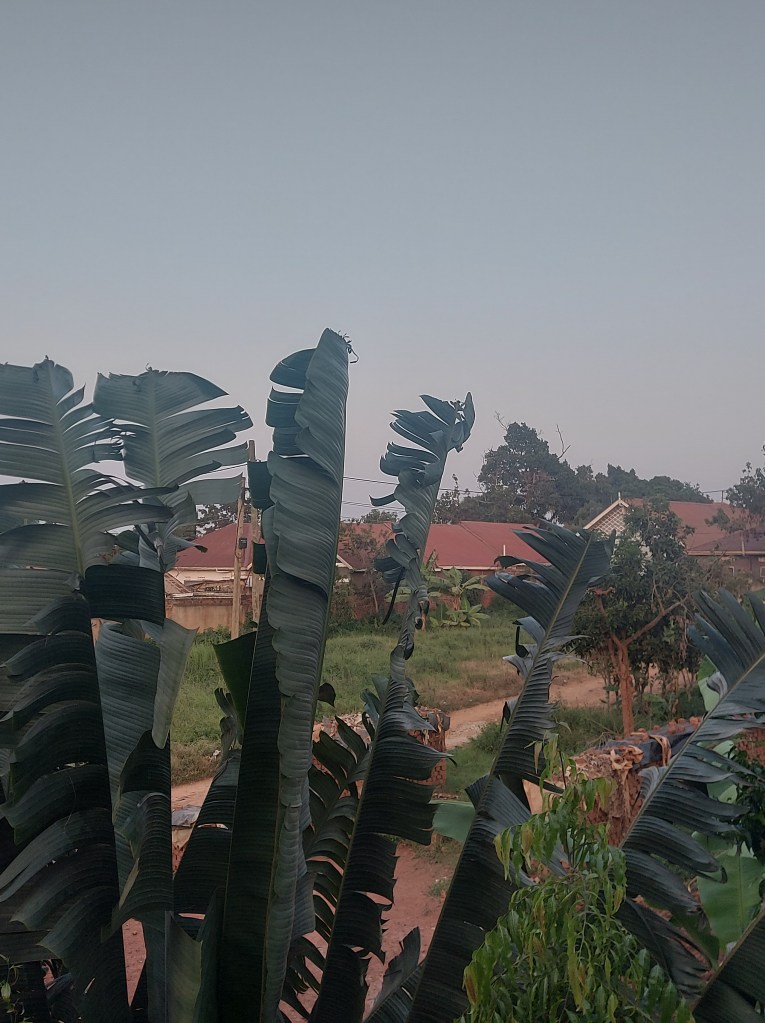
She said we were bright shining spots in her vision – our white skin, I suppose. She wept from being kept from heaven. She was 115 years old. Ugandan radio played softly beside her bed, and I saw how her eyes shifted about, trying to see her visitors. The hand that reached out to us was frail and softer than a baby’s. She wept because she didn’t feel human anymore. The end of life is a strange thing – it hangs about like a dirty old mosquito net and there is nothing we can do to speed its leaving. But it only takes an instant for the net to fall away leaving glory in its wake… Ida (for that was her name) did not feel human anymore, and so she wept. I asked Ivan to tell her this was because she was being transformed into something greater. Pretty words, but hard to believe when none of us can see it through the suffering. We left the house, wondering how it would all end. The radio faded, the breeze was a loud rattling in the banana palms. A wind to carry the strong waiting soul home again. Home to where it all began.
We were quiet as Cyrus drove us down the mountain, away from the tiny village with the frail body. Caught a glimpse of a valley with a stream, a spreading rock and trees around and I thought of heaven, while the faint, echoing lines of a creed came to me from somewhere far away. The communion of saints, the forgiveness of sins, the resurrection of the body,
and life everlasting…
Joy
Pastor Willy begins a song and the people join in – the voices echoing against cement and dust and the deep, deep chorus of joy. Clapping, singing, standing tall with arms raised; Pastor Willy’s gravelly voice and the rest of those joyful Ugandans all singing together. A young man across the room smiles at me. I grin back heartily.
Stories
One of our final nights in Uganda – we look out across Kampala and talk over black tea as white-shirted kids walk home from school. A pink moon rises above a spreading traveller’s palm and the light fades quickly, darkness gathers in the corners. Of course, there is no twilight on the equator. We all eat dinner on the balcony with the night breezes and the occasional mosquito. The black hillside is littered with lights like stars and the moon is a buttery rose steady in its vault above. Little Jemima sits on my lap, and we tell each other stories in the warm light. Fairytales about gardens and trees and adventure stories about brave, lost little girls who find their way home by the stars. Then I run out of stories, but Jemima wants another. She whispers into my ear,
‘We’ll borrow each other’s stories.’
‘Yes, we’ll share them together,’ I whisper back. I wonder at the millions of African children out there in the dark who have no one to tell them stories…
Amina
They were singing the last words and he was standing up, clapping with joy.
We saw each other smiling and stayed that way as long as we could:
smiling at each other, strangers and friends,
each understanding the other in the midst
of a fading heaven, soon to come again.
A brother and a sister in this
big, wide
world.
Thanks for reading my work. I hope those stories and poems helped to show you a little of what being in Uganda was like. It really is an amazing a place and we all had a grand time of it.
I travelled with Bill and Norma who started the organisation Australia HOPE International. As you can imagine, Africa is full of need and Bill and Norma work alongside the poorest of the poor in Uganda. It was beautiful to see dignity restored among people who would otherwise be in dire need and much strife – I saw it in their faces and when I looked into their eyes. Their grateful joy at no longer being helpless, humiliated and afraid was wonderful to witness.
Along with my friend Chloe who joined us on the trip, I will be helping to organise an exhibition fundraiser for the Congolese refugees who you have just read about. More info to come on that front, so keep an eye out.
I keep telling everyone I have left my heart in Africa! I will have to go back to find it one day, but until then, I will do all I can over here to bring God’s kingdom ‘on earth as it is in heaven’. And so can you! *Australian dollars go a fair way in Uganda, so if you’d like to give to Bill and Norma – the website is here: https://ahi.org.au/
*Please excuse this cheeky appeal! I take solace in the fact that I haven’t asked for money from any of you – yet!


Leave a Reply